
Building a Strong Muslim Identity in Modern Society
06/09/2026| IslamWeb
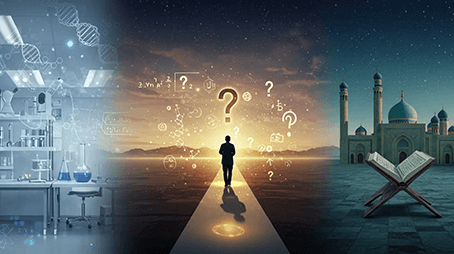
Across many parts of the world today, Muslims live as minorities within societies shaped by values and lifestyles very different from Islamic teachings and values. In such environments, many Muslims — especially parents — ask an important question: how can we preserve our Islamic identity without cutting ourselves off from the society around us?
Islam does not teach isolation from people, nor does it approve of dissolving one’s faith and values in the name of integration. Rather, Islam calls the believer to a balanced path: to remain steadfast according to the guidance of Allah the Almighty while dealing with people with wisdom, justice, mercy, and good character.
Allah the Exalted says in the Quran (what means), “O you who believe, protect yourselves and your families from a Fire whose fuel is people and stones.” — Surah At-Tahrim (66:6)
This verse reminds us that preserving faith is not only an individual responsibility. It begins inside the home. Parents are entrusted with nurturing iman (belief), teaching Islamic manners, and cultivating an environment where remembrance of Allah the Exalted is natural and beloved. The Muslim family is not merely a social unit; it is the first place where Islamic identity is formed.
At the same time, Allah the Exalted commands the believers to remain firm upon His guidance: “So remain on a right course as you have been commanded...” — Surah Hud (11:112)
Steadfastness is especially important in societies where religious commitment is often viewed as strange, outdated, or restrictive. Many Muslims today — particularly the younger generation — experience pressure to compromise Islamic values in order to fit in socially or culturally. In some cases, faith itself becomes reduced to cultural symbolism with little knowledge or conviction behind it.
For this reason, a strong Muslim identity cannot be built merely upon inherited customs, ethnic traditions, or emotional attachment. It must be built upon sincerity and sound knowledge.
Allah the Exalted says (what means): “…Say, "Indeed, the guidance of Allah is the [only] guidance…" — Surah Al-Baqarah (2:120)
Without knowledge, a person becomes vulnerable to confusion and doubt. In an age where ideas spread instantly through the internet, Muslims are constantly exposed to philosophies and lifestyles that shape how people think about morality, family, gender, success, and even the purpose of life itself. What is celebrated today may be condemned tomorrow, because human desires and social trends constantly change.
Islam, however, anchors the believer to the revelation — not to passing fashions or public opinion.
Allah the Exalted warns: “Have you seen he who has taken as his god his [own] desire…?” — Surah Al-Jathiyah (45:23)
Modern society often presents freedom as the ability to follow every desire without restraint. Islam teaches that true freedom is found in servitude to Allah the Almighty alone. A person who is enslaved to desires, trends, or social pressure is not truly free. But the one who submits to Allah the Almighty is liberated from slavery to creation.
At the same time, Muslims are not commanded to withdraw from society or treat others with hostility. Islam teaches believers to be people of benefit wherever they live — honest in business, trustworthy in speech, compassionate toward neighbors, and just in their dealings.
The Prophet Muhammad (peace be upon him) said:
“The believer who mixes with people and is patient with their harm is better than the believer who does not mix with people and is not patient with their harm.” — (Reported by Ibn Majah)
This hadith reflects the balanced nature of Islam. A Muslim interacts with society, contributes positively, and shows excellence in character, while remaining firm upon Islamic principles. Preserving identity does not require arrogance or harshness. In fact, one of the greatest means of protecting Islam in society is beautiful character.
Family remains one of the greatest protections against the erosion of faith. Children are shaped less by lectures and more by what they witness every day inside the home. When prayer is treated seriously, when the Qur’an is recited regularly, when honesty and modesty are lived values rather than slogans, faith becomes rooted naturally in the hearts of children.
The Prophet (peace be upon him) said: “Every one of you is a shepherd, and every one of you is responsible for his flock.” [Al-Bukhari and Muslim]
Parents therefore carry a heavy trust before Allah regarding the religious upbringing of their children.
Strong Muslim communities are also essential. Throughout history, Muslim minorities preserved their religion through circles of knowledge, righteous companionship, strong families, and attachment to the mosque. In many places today, Mosques and Islamic centers are not only places of worship; they are places where Muslims reconnect with faith, knowledge, and a sense of belonging.
Ultimately, preserving Islamic identity is not about fearing the modern world or rejecting society altogether. It is about remaining connected to Allah the Almighty while navigating modern life with wisdom and clarity. A Muslim should aspire to be beneficial to humanity while remaining faithful to Divine guidance.
Islam does not ask the believer to choose between faith and contribution to society. Rather, Islam teaches that the strongest contribution comes from a heart guided by the Revelation, disciplined by worship, and grounded in sincerity.
The challenges facing Muslims today are real, especially in societies where religious values are increasingly weakened or questioned. But Allah the Almighty has not left the believers without guidance. Whoever holds firmly to the Qur’an and the Sunnah, seeks beneficial knowledge, and sincerely turns to Allah the Almighty will find stability even in times of confusion.
A strong Muslim identity is not a burden. It is a source of dignity, direction, and peace.